The whole cabinet: power, noise, water
Loud Fan Noise From Behind the Sub-Zero Grille
In the owner's words
A loud whirring comes from the bottom of the unit, louder than it has ever been, and now and then it turns into a tick or a grind.
Short answerFan noise from behind a Sub-Zero grille usually belongs to the condenser fan: lint dragging on it, a blade knocked loose or blocked, or a motor whose bearings are wearing. A noise that follows the doors comes from an evaporator fan instead. Sub-Zero Appliance Repair Seattle, (206) 339-4211, works out which fan before replacing any.
Signed
- Technician
- Dean Halvorsen
- Bench time
- 19 years in the trade
- Title
- Refrigeration technician — sealed systems and airflow
- Carries
- EPA 608 certified
- Dated
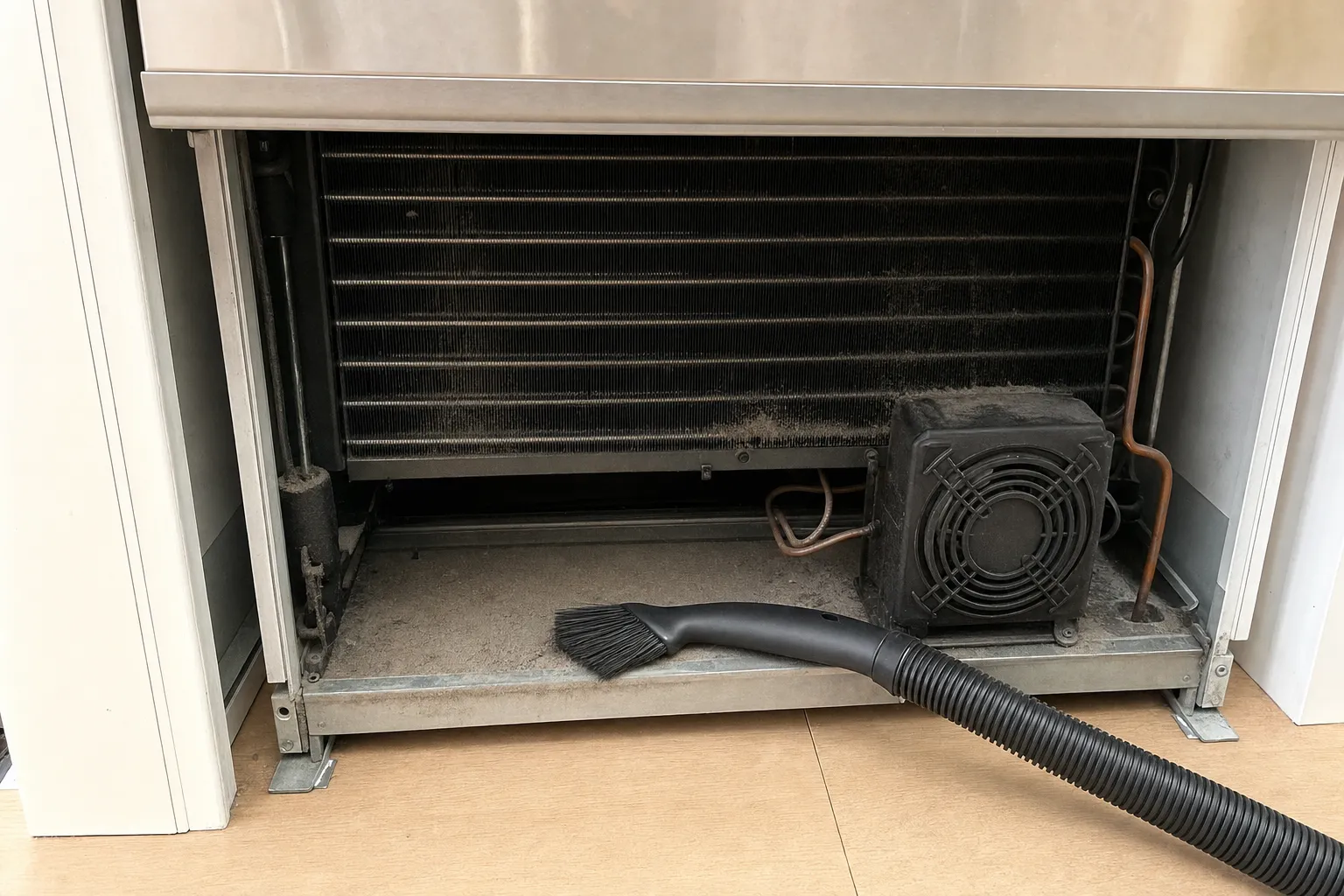
- Condenser fan
- Condenser coil
- Lint and dust
Pattern Ledger
Loud Fan Behind the Grille: how it usually goes
- Most often Lint and dust packed around the condenser fan
-
Gives itself away by A furred grey coil behind the grille, and a whirr that softens once the area is vacuumed
Price band none set for this work — quoted after the diagnosis
- Sometimes Condenser fan blade loose or obstructed
-
Gives itself away by A steady tick or scrape that keeps time with the fan and stops when the compressor stops
Price band none set for this work — quoted after the diagnosis
- Rarely Fan motor bearings wearing out
-
Gives itself away by A growl that builds over weeks and stays even after the coil and grille are clean
Price band Evaporator or condenser fan motor$330–$690
Telling these three apart is what the $89 visit is for. Sub-Zero Appliance Repair Seattle · (206) 339-4211
Two kinds of fan, two places
A built-in Sub-Zero moves air with more than one fan. The condenser fan lives down in the machine compartment behind the grille and draws room air across the condenser coil. The evaporator fans sit inside the compartments and push cold air around the food. Opening the doors separates them: a noise that ignores open doors comes from below, while one that quits as the doors open comes from inside.
What wears, and what it leads to
Behind the grille, the usual story is lint. The coil gathers it, the blade collects it, and eventually a clump drags on the blade or throws it out of balance. The service manual for the 600-series built-ins lists an obstructed or loose condenser fan blade among the causes of warm temperatures, so a fan that has turned loud is worth attention before the cabinet starts to warm. When the grille is clean and the growl stays, the motor itself is usually tired.
What you can check safely
- Open all the doors. If the noise stops, and returns only once a particular door is shut, it comes from the fan inside that compartment.
- With the breaker off, take off the grille as your use and care guide shows and vacuum the condenser with a soft brush, without bending the fins or using a chemical cleaner.
- Make sure no package inside is pressed against a fan cover; Sub-Zero lists food packaging among the causes of fan noise.
Beyond the grille, owner checks end there: the condenser fan, the wiring behind it and any sealed tubing belong on a service call — Sub-Zero Appliance Repair Seattle, (206) 339-4211.
Questions owners ask about this
Which sounds from a Sub-Zero are normal?
A steady hum and some vibration while it runs, a brief shudder as the compressor starts or stops, and sizzling or crackling during a freezer defrost are all normal. Grinding, knocking that persists with the doors shut, or a buzz that keeps building are not, and Sub-Zero Appliance Repair Seattle, (206) 339-4211, should hear them.
Can I tighten or straighten the fan blade myself?
The condenser fan sits beside live wiring and a compressor that can start without warning, so any work on the blade or the motor is for a technician with the power isolated. Your part ends at switching off the breaker, removing the grille as the guide describes, and vacuuming the coil.
Does a dusty condenser make the unit louder?
It can. Lint on the coil and the fan changes how air moves through the compartment, and the compressor runs longer to shed the same heat, taking the fan with it. Sub-Zero suggests cleaning the condenser every six to twelve months, and more often in homes with pets.