Refrigerator (fresh-food side)
Sub-Zero Fresh-Food Temperature Swinging Through the Day
In the owner's words
In the morning the fridge feels properly cold, but by late afternoon the butter is soft and the drinks are barely cool. Overnight it seems to recover again.
Short answerA Sub-Zero fresh-food side that climbs through the day and recovers overnight is usually losing a fight with heat, not failing outright. What we usually find is a condenser clogged with dust, a door that is not sealing, or a busy kitchen that keeps the door open. Sub-Zero Appliance Repair Seattle, (206) 339-4211, separates normal cycling from a real swing.
Signed
- Technician
- Dean Halvorsen
- Bench time
- 19 years in the trade
- Title
- Refrigeration technician — sealed systems and airflow
- Carries
- EPA 608 certified
- Dated
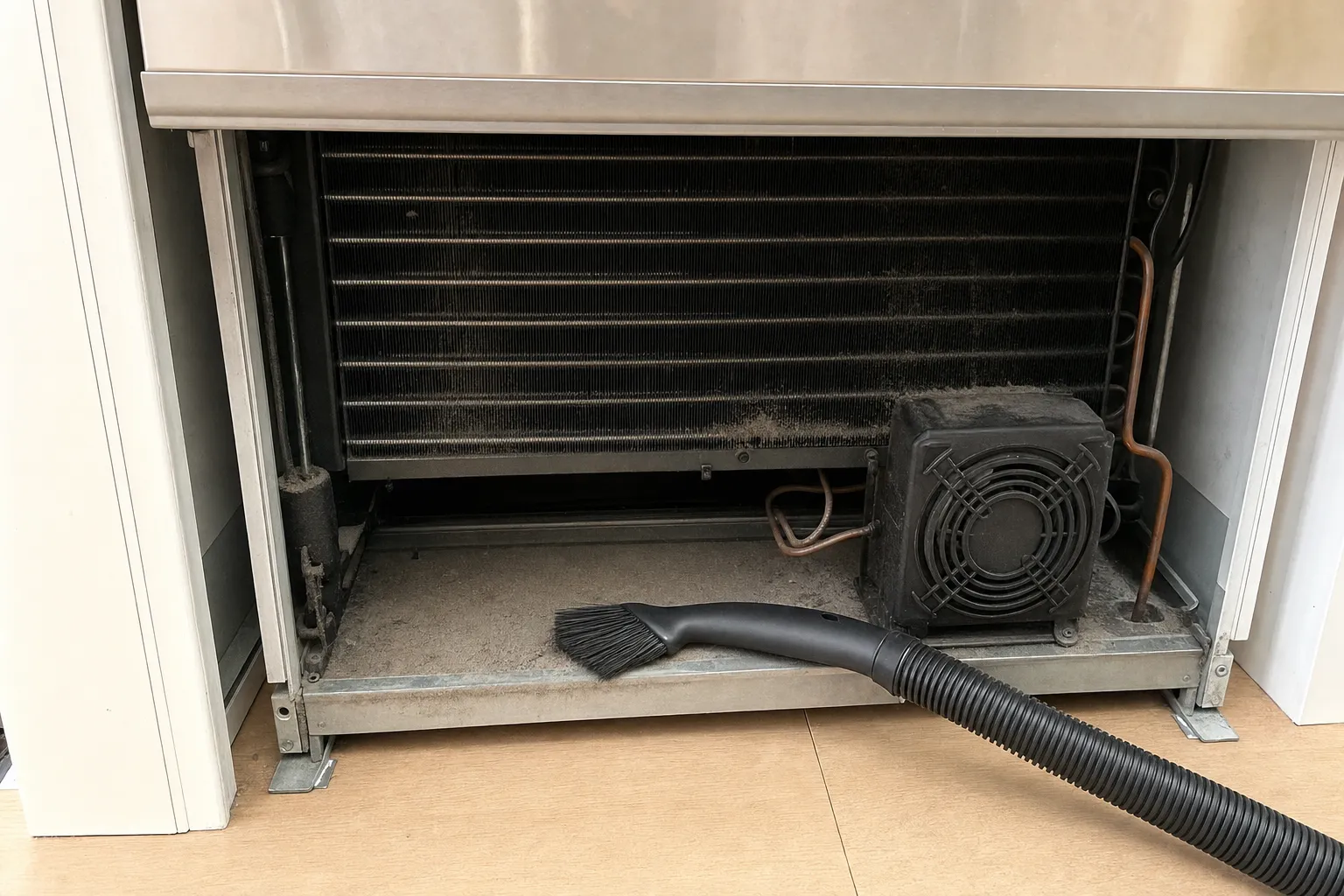
- Condenser coil
- Condenser fan
- Lint and dust
Pattern Ledger
Fridge Temperature Swinging: how it usually goes
- Most often Door traffic and warm groceries
-
Gives itself away by The worst readings follow meal times and shopping days, and the cabinet settles again within several hours
Price band none set for this work — quoted after the diagnosis
- Sometimes Condenser coil furred with dust and lint
-
Gives itself away by Swings are worst on warm afternoons, and the coil behind the lower grille looks grey and felted
Price band none set for this work — quoted after the diagnosis
- Rarely Torn or flattened door gasket letting room air in
-
Gives itself away by A split or crushed stretch of seal, often with moisture or frost collecting along that same edge
Price band Door gasket or seal replacement$290–$640
Telling these three apart is what the $89 visit is for. Sub-Zero Appliance Repair Seattle · (206) 339-4211
Normal cycling versus a real swing
Every refrigerator runs, rests and runs again, so a thermometer will always wander a little. The pattern that matters is the one that repeats: warmest in late afternoon or after cooking, coldest before breakfast. In a Seattle kitchen without air conditioning, a warm spell can push a struggling cabinet past what it can manage.
What sits behind the pattern
Heat has to leave through the condenser, so a coil packed with lint is the first thing we look at, followed by the door seals. Less often the cause is inside the compartment: an evaporator fan that has stopped, a sensor that misreads, or a light that stays on with the door closed and quietly warms the shelves. The built-in 600-series manual lists each of those among the causes of a warm refrigerator.
What you can check safely
- Measure with a thermometer in a glass of water on the middle shelf, morning and late afternoon, so you know how big the swing really is.
- Look at the control panel for Sabbath or showroom mode, or double dashes where the refrigerator reading should be.
- Check that every door closes against its seal without a bin, jar or bag holding it off.
- Note when the coil behind the grille was last cleaned; Sub-Zero asks for a cleaning every six to twelve months, more often with pets.
Owner checks end there. Sealed tubing, wiring behind the grille and anything held by screws belongs on a service call — Sub-Zero Appliance Repair Seattle, (206) 339-4211.
Questions owners ask about this
How much temperature change is normal in a Sub-Zero refrigerator?
Sub-Zero puts normal fluctuation at about five degrees either side of the setting, driven by door openings, humidity and room temperature. After a big grocery load, give it several hours. A swing larger than that, repeating daily, is worth a call to Sub-Zero Appliance Repair Seattle, (206) 339-4211.
Why would a dusty condenser only cause trouble in the afternoon?
The condenser sheds the heat the refrigerator pulls out of your food. Dust smothers it, and the problem shows most when the kitchen is warmest, so a cabinet that copes on a cool morning falls behind by late afternoon. Indoor Sub-Zero models are built for a room held somewhere from 60 to 90°F.
Can I clean the Sub-Zero condenser myself?
Sub-Zero publishes owner cleaning steps for each product line, warns against chemical cleaners and asks you not to bend the aluminum fins. If readings have climbed above 48°F with the setting at 38, it notes that a cleaning alone is unlikely to bring it back, and that is when a diagnosis earns its keep.