Refrigerator Repair
Sub-Zero Humming Loudly: Normal Running Sound or a Fault?
A fridge hums loudly when the compressor or a fan motor is working harder than it should, usually from a dusty condenser, a warm kitchen or a worn fan bearing. Here is how to tell a healthy Sub-Zero hum from a fault noise and what to do about each.
Reported by
Dean Halvorsen
Refrigeration technician — sealed systems and airflow · 19 years in the trade
- EPA 608 certified
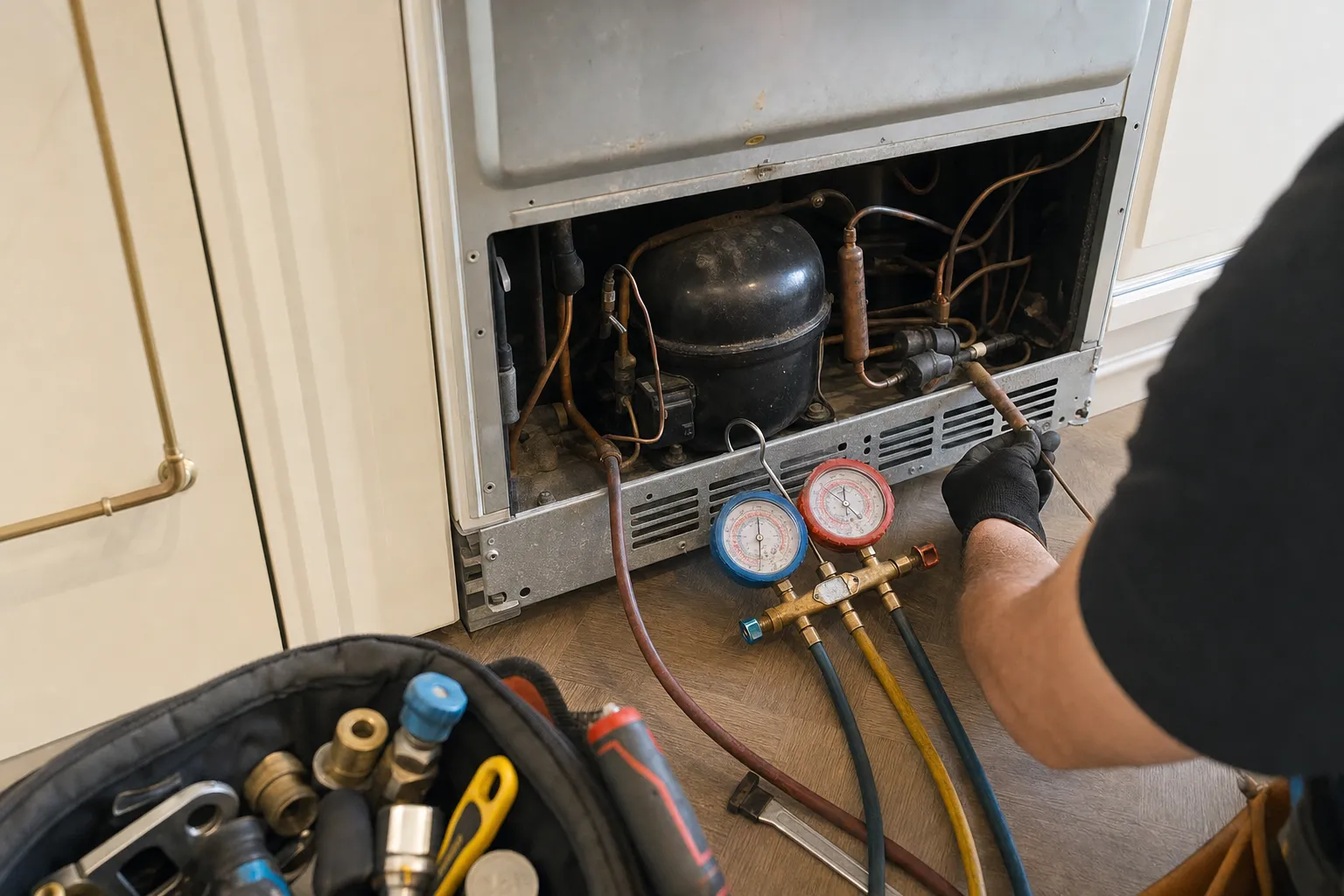
A loud hum from a refrigerator nearly always comes from one of two parts: the compressor, which is running longer or harder than it should, or a fan motor whose bearings are beginning to wear. A steady, low hum that switches on and off is just the machine doing its job. A hum that never seems to stop, gets louder week by week, or shows up together with a buzz, a click or a warm shelf is a fault noise worth tracking down. On a built-in Sub-Zero the sound is easy to misjudge, because the whole cooling system sits in one compartment at the top or the base of the cabinet, and the surrounding woodwork can turn an ordinary hum into something that sounds alarming late at night.
What a healthy built-in sounds like
Before hunting for a fault, it pays to know which noises belong. A working refrigerator makes a handful of them every day:
- A low, even hum from the compressor. It may last a few minutes, or much longer after the doors have been opened often or a bag of warm groceries has gone in.
- A soft whir from the fans that push air across the evaporator coil inside the cabinet and the condenser coil in the machine compartment.
- A buzz of a few seconds when the water valve opens to refill the ice maker, followed by cubes clattering into the bin.
- Gurgles, ticks and pops as refrigerant moves through the tubing and plastic parts expand and shrink with temperature.
One setting catches out plenty of owners. Max Ice on Classic (CL), Designer (DET, DEC) and PRO Series models raises ice output by as much as 30% for 24 hours, and during that stretch some parts run faster and sound distinctly different. On models with a display, three ice cube icons mean Max Ice is active, while a single cube simply means the ice maker is on. If the new hum started the same day someone pressed that button before a dinner party, give it a day before worrying.
When the compressor hum is the real problem
A compressor that hums almost without a break is usually fighting heat it cannot get rid of. The condenser coil releases that heat into the room, and once lint, pet hair and kitchen dust coat its fins, the compressor must run longer and harder to hold the set temperature. On a Classic (CL) unit the condenser is behind the flip-up grille at the top; on a Designer (DET, DEC) unit it hides behind the kickplate at floor level, held by two screws.
Room temperature plays a part as well. Plenty of Seattle houses have no air conditioning, so on the handful of truly hot summer afternoons a kitchen can climb well past what the refrigerator normally works against. A longer, louder run during a heat spell is expected and should ease once the house cools overnight. A heavy hum that persists through a cool, gray week is a different matter.
Some models report an overworked compressor on their own. On certain current built-ins, the 648PRO among them, an EC40 code with Service flashing means the freezer compressor has been running excessively. Possible reasons include a door that never fully closed, a sensor giving false readings, a fan that has stopped, or trouble inside the sealed refrigerant circuit. Sub-Zero advises cleaning the condenser if the temperature is less than 10° above the setting, and booking service if it is more than 10° above and no door was left open. Do not clear that code while the temperature is still climbing. The refrigerator-side equivalent is EC50: with temperatures close to normal, clean the condenser and hold the bell key, which is the door-ajar alarm, for 15 seconds to clear it, but call for service if the readings are high.
Fan motors and the hum that changes pitch
A fan motor with a tired bearing gives off a hum that wavers, climbs in pitch or turns into a grinding drone, and owners often blame the compressor for it. A useful clue: on many refrigerators the evaporator fan inside the cabinet stops when the door opens, so if the noise drops the moment you open the door, that fan is the likely culprit. A hum that carries on unchanged from the machine compartment with the door open points instead to the condenser fan or the compressor. Our page on loud fan noise behind the grille goes through that compartment in more depth.
A failing fan is more than a nuisance. When the condenser fan slows, heat builds up and the compressor labors harder; when the evaporator fan quits, the fresh-food side warms up while the freezer often stays cold. Replacing an evaporator or condenser fan motor typically costs $330–$690 once the technician has confirmed which of the two is at fault.
Buzzing from the water valve or ice maker
A buzz is not the same as a hum, and telling them apart narrows the search quickly. The solenoid valve that feeds the ice maker buzzes briefly every time it opens, and that is normal. A buzz that goes on and on, particularly if no water reaches the ice mold or you can hear it with the ice maker switched off, suggests the valve is stuck or failing, or that household water pressure is too weak for it to seat properly. Switch the ice maker off and close the supply valve until someone can look at it. Work on the ice maker, the water valve or the supply line usually costs $270–$750.
Rattles and buzzes that seem to come from the cabinet panels rather than the machinery are often a loose trim piece or a unit that has crept against the woodwork; our page on rattling against the cabinetry covers that case.
Sorting the sound in a minute
| What you hear | Where it seems to come from | Likely source | First step |
|---|---|---|---|
| Steady low hum that cycles off | Machine compartment | Compressor running normally | Nothing to do |
| Hum that almost never stops | Machine compartment | Dusty condenser or a warm room | Clean the condenser |
| Wavering hum or grinding drone | Inside the cabinet or behind the grille | Worn fan motor bearing | See if it quiets with the door open |
| Buzz lasting a few seconds | Near the ice maker | Water valve filling | Normal |
| Buzz that keeps going | Near the ice maker | Stuck or failing water valve | Close the supply and call |
| Faster, different sound for a day | Ice maker area | Max Ice running | Wait 24 hours |
Two checks to make before you call
Two simple checks tell you whether the hum is a nuisance or a warning. First, confirm the temperature. USDA food-safety guidance is to stand an appliance thermometer in a glass of water in the middle of the refrigerator, leave it for 5 to 8 hours, and adjust the control if it reads outside 38 to 40 °F, then check again after another 5 to 8 hours. A hum with correct temperatures can usually wait for a convenient appointment; a hum with a warming compartment cannot.
Second, give the condenser a cleaning, unless the refrigerator was installed under 6 months ago, in which case Sub-Zero says it is not needed yet. Cut the power from the control panel first. Gloves protect your hands from the sharp metal, and the vacuum’s soft brush should travel along the fins, never across them, so they stay straight. If the refrigerator reads above 48 degrees while set at 38, Sub-Zero’s own view is that a cleaning is unlikely to bring it back, and a service visit is the next step.
When to call and what it costs
Call if the hum is new and constant, if it arrives with an error code or a warming compartment, or if a fan noise keeps getting worse. Homeowners in Queen Anne, Madison Park, Laurelhurst and Magnolia can reach us at (206) 339-4211 or use the booking button on this page, and our refrigerator repair service page explains how a visit works. A single $89 fee pays for our technician coming out and working out exactly what is wrong; say yes to the repair and we deduct those $89 from the bill. The figures in this guide are typical bands, with the firm price given after diagnosis. A compressor or sealed-system repair sits at the expensive end at $1,410–$3,350, which is still a fraction of what a new built-in costs. A worn fan or a sticking valve costs far less, which makes a loud hum worth having diagnosed rather than living with.
Questions that come up next
Is it normal for a refrigerator to hum all the time?
No, a healthy refrigerator hums in cycles and goes quiet in between. A hum that hardly ever pauses usually means the compressor is struggling to shed heat, most often because the condenser coil is dusty or the room is unusually warm. Clean the condenser, check the temperature with a thermometer, and call for service if the noise carries on during mild weather.
Why did my Sub-Zero sound different after I turned on Max Ice?
Max Ice deliberately speeds the ice maker up. For a full 24 hours after it is pressed, Classic (CL), Designer (DET, DEC) and PRO Series units make up to 30% more ice, so some components spin faster and sound unfamiliar. Once the 24 hours are over, the noise should settle back to normal.
Can a loud hum mean the compressor is failing?
It can, but a worn fan motor or a clogged condenser often makes the same sound and costs far less to put right. A genuine compressor problem tends to arrive with rising temperatures or an excessive-run code such as EC40 or EC50, and that combination is the signal to book a diagnosis.
How much does it cost to have a noisy refrigerator diagnosed?
The visit and full diagnosis are a flat $89, and that amount is credited toward the repair if you approve it. Once the technician has found the source you get a firm quote; replacing a fan motor, for example, typically costs $330–$690.
Will opening the door help me find where the noise comes from?
Yes, it is one of the quickest clues you have. On many refrigerators the evaporator fan pauses when the door opens, so a hum that fades as the door swings open usually belongs to that fan, while a sound that continues unchanged points toward the machine compartment.